
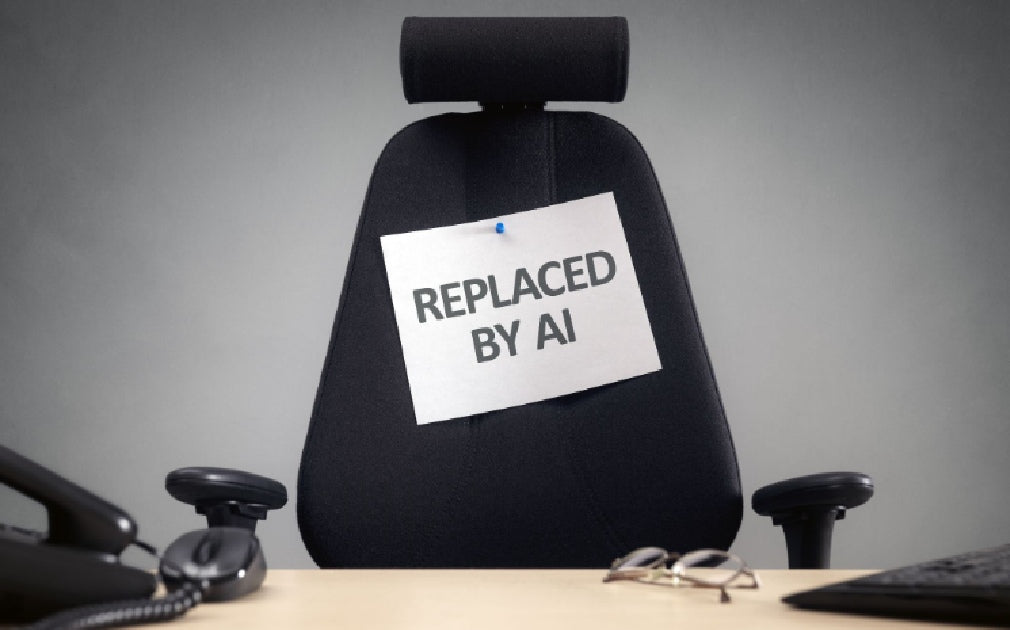
Fifty-five per cent of employers now regret laying off workers for AI. Half of those AI-attributed layoffs are forecast to be quietly rehired, often offshore or at lower pay. The numbers are still climbing, including in Australia. For the vocational education and training sector, this is not a spectator event. It is a direct signal to rebuild workforce capability around human judgment, applied competence, and AI literacy at the same time.
The celebration came too early.
Across 2024 and 2025, executives announced artificial intelligence strategies with the confidence of people convinced they had found a shortcut to efficiency. Boardrooms embraced automation. Investors rewarded leaner operating models. Headlines applauded organisations that claimed they were reducing staffing costs by replacing people with AI-enabled systems. The message was blunt: technology had arrived to do the work faster, cheaper, and at scale, and those who failed to act boldly would be left behind.
Now the correction has begun, and the numbers are no longer a forecast. They are a scoreboard.
Forrester Research's Predictions 2026: The Future of Work report, published in October 2025, found that 55 per cent of employers now regret laying off workers for AI. Forrester also predicts that half of AI-attributed layoffs will be quietly rehired, though often offshore or at significantly lower salaries. In December 2025, Harvard Business Review published a survey by Thomas Davenport of more than 1,000 global executives, which found that 60 per cent had already reduced headcount in anticipation of AI's future impact, while only 2 per cent said large layoffs were tied to actual AI implementation. The gap between what AI can do now and what employers assumed it would do soon sits at the heart of the correction.
A scoreboard that the sector can no longer ignore
The scale of the layoffs is substantial, and they are not over.
According to Challenger, Gray and Christmas, 54,694 job losses in 2025 were attributed by employers to AI, representing roughly 4.5 per cent of all layoffs tracked that year. The trend accelerated sharply into 2026. By mid-April 2026, analysts tracking the tech sector recorded more than 150,000 technology layoffs globally across more than 500 companies, with AI cited as the most frequent driver. A National Bureau of Economic Research working paper based on a survey of 750 United States chief financial officers, reported by Fortune in March 2026, found that 44 per cent of CFOs plan AI-related job cuts in 2026, with implications for around 502,000 roles across the United States economy. Resume.org's 2026 survey of 1,000 hiring managers, cited by the Australian Computer Society, found 92 per cent of companies plan to hire this year, 55 per cent also expect layoffs, and 44 per cent of those cite AI as the main driver.
The biggest single events in 2026 so far have been overwhelming in scale. Oracle has cut 25,254 roles in a sweeping AI-driven restructuring. Amazon reduced its corporate workforce by roughly 16,000 in January 2026, following 14,000 cuts in October 2025. Jack Dorsey's Block eliminated 4,000 positions, or 40 per cent of its workforce, explicitly citing AI. Dell Technologies removed 11,000 roles. Meta and Snap have added thousands more. The Forrester prediction that half of these reductions will quietly be rehired offshore or at lower salaries has already begun to play out, with Goldman Sachs research from December 2025 showing that stock prices now fall by around 2 per cent on average after AI-attributed layoff announcements, reversing the earlier pattern of investor reward.
Australia is not a bystander
On 11 March 2026, Australian productivity software company Atlassian announced cuts of approximately 10 per cent of its workforce, or around 1,600 roles, with Co-CEO Mike Cannon-Brookes stating the decision was made to self-fund further investment in AI and enterprise sales. Australian logistics software firm WiseTech Global has cut approximately 2,000 jobs in early 2026, with its leadership attributing the reduction to rapid gains in AI-assisted software development. RationalFX data reported by Ticker News in March 2026 shows that tech layoffs in Australia reached 4,450 positions in the first ten weeks of 2026, compared with 874 in all of 2025, a more than fivefold increase. Sydney ranked third globally among cities for technology job losses in early 2026, behind only Seattle and San Francisco. Telstra and Envato have added to the local total. The Australian Computer Society's Information Age reported in March 2026 that AI was cited as the primary driver behind every major Australian technology sacking of the year.
The most instructive Australian case, however, happened the year before. In mid-2025, Commonwealth Bank of Australia announced that it would cut 45 customer service roles in its Direct Banking team after the introduction of an AI voice bot. On 21 August 2025, after pressure from the Finance Sector Union, the bank reversed the redundancies and apologised to the affected employees. The bank had claimed the AI reduced call volumes by 2,000 per week. Union members disputed this, reporting that call volumes in fact rose, overtime was being offered, and team leaders were being drafted to answer phones. The bank publicly admitted it had made an error in declaring the roles redundant. It was the first mass AI-attributed layoff in Australia to be publicly reversed, and the warning attached to it is not subtle.
Why Klarna, IBM, Salesforce, and CBA all ended up in the same place
The case that defined global attention was Klarna. The Swedish fintech became famous for replacing 700 customer service staff with AI and celebrating the efficiency gains. Within a year, the company was rehiring humans because service quality had declined, customers had revolted, and the AI was proving unable to handle complex, emotionally charged, or unusual cases. IBM has gone through a similar cycle, rehiring staff after replacing large parts of its human resources function with AI. Salesforce, which cut 4,000 customer support roles in 2025, has publicly acknowledged that AI still handles only about 50 per cent of customer conversations, with humans handling the rest. Commonwealth Bank of Australia has now joined that list of employers quietly restoring human roles they had publicly declared redundant.
The lesson from this pattern is not that AI has failed. It is that many organisations failed to understand what AI is actually good at, where its limitations lie, and how much human infrastructure is still required around it. Forrester's AIQ research found that only 16 per cent of workers in 2025 had high AI readiness, with a forecast of 25 per cent by 2026. Only 23 per cent of AI decision-makers reported that their organisations offered prompt engineering training. Workers were being fired for failing to be productive with tools their employers had never trained them to use. At the same time, 57 per cent of generative AI investment decision-makers surveyed by Forrester expect AI to increase employment at their organisations rather than decrease it. That contradiction is the story.
For Australia's vocational education and training sector, this matters because VET sits precisely at the intersection of applied human capability and workforce transition. VET is where the country builds the practical competence that cannot be reduced to machine output. A disability support worker is valuable because they notice distress, respond with empathy, adapt to the person in front of them, document accurately, communicate with colleagues, and act safely in unpredictable situations. A carpenter is valuable because they interpret plans, work within standards, adapt on site, manage hazards, and produce a safe and fit-for-purpose result. An enrolled nurse, an early childhood educator, a diesel mechanic, a hairdresser, a plumber, a community services worker, a trainer and assessor: these occupations rely on situational judgement, embodied skill, ethical reasoning, and human presence that current AI systems do not possess.
The global correction now emerging is not anti-technology. It is pro-capability. The employers who survived the 2025 layoff wave without regret are those who integrated AI sensibly, kept skilled people in the loop, and redesigned work so that machines support people and people supervise machines. That is the workforce VET must now produce.
Where Australia's regulator has already drawn the line
The regulatory environment in Australia has already adjusted to this reality, and providers who treat AI as a technology question rather than a compliance question are exposed.
The Standards for Registered Training Organisations 2025 have been in force since 1 July 2025. The Standards do not prescribe specific AI rules, but their expectations for governance, trainer and assessor capability, assessment integrity, learner support, and data protection create a clean regulatory environment in which unmanaged AI use represents a material compliance risk. The Australian Skills Quality Authority's Corporate Plan 2025 to 2026 commits to cracking down on fraudulent practices, including non-genuine assessment evidence and non-authentic student work. ASQA's Regulatory Risk Priorities for 2024 to 2025 explicitly name academic cheating, including the use of artificial intelligence tools, contract cheating, and plagiarism as key threats to assessment integrity.
ASQA's own Artificial Intelligence Transparency Statement, last updated on 18 March 2026, commits the regulator to responsible AI use with human-in-the-loop decision-making, protection of personal and sensitive data, clear ethical standards, and annual public reporting on AI use. At the ASQA regulatory update in Brisbane in March 2026, the regulator made the position explicit: AI cannot be used to make assessment decisions, and AI cannot be used to complete validation where qualified people are required. Revised Practice Guides due in mid-2026 will include non-compliant AI use against the requirements. The message is direct. If the regulator governs its own AI use with this level of structure and transparency, providers must do the same.
At the sector level, ASQA confirmed that 212 serious matters were under investigation by its enforcement team in early 2026. Since late 2025, more than 36,000 students have received letters of intent to cancel their qualifications, and more than 33,000 cancellations have been executed. The enforcement focus on authenticity, genuine competence, and non-fraudulent evidence is not rhetorical. It is active. The 2026 Annual Declaration on Compliance window, which ran from 3 March to 31 March 2026, was the first full reporting cycle under the 2025 Standards, and ASQA has stated publicly that declarations will inform the targeting of performance assessments.
The national policy context reinforces this direction. The Australian Public Service AI Plan and the Standard for AI Transparency Statements require Commonwealth agencies to disclose AI use, assess risk through the procurement lifecycle, maintain oversight, and decommission tools when harms emerge. The Australian Framework for Generative AI in Schools, endorsed in June 2025, sets out six principles, including transparency, fairness, accountability, and privacy and security. The National Skills Plan 2025 to 2026 Update explicitly links VET quality to digital transformation and data capability. RTOs sit inside this framework as regulated educational institutions, employers, and, in many cases, publicly funded entities with accountability obligations that do not pause for technological change.
What strong AI governance looks like inside an RTO
The RTOs that will navigate 2026 successfully are those that treat AI governance as part of their core compliance, quality, and workforce strategy rather than a technology experiment managed by information technology staff alone.
Strong practice starts with governance. Every RTO must have a documented AI policy that defines permitted uses, prohibited uses, vendor and data controls, and human oversight arrangements. Every AI tool in use must have a completed risk assessment recording its purpose, data inputs and outputs, hosting location, data retention and model training reuse policies, explainability, integration with other systems, and the human checkpoints in place. This documentation is not optional paperwork. It is audit-ready evidence of self-assurance under Quality Area 4 of the Standards for RTOs 2025.
Assessment is the highest-stakes domain. Under the Rules of Evidence, evidence must be valid, sufficient, authentic, and current. AI-generated responses by learners submitted without attribution, AI-drafted assessor judgements, AI-completed validation by unqualified operators, and AI-generated assessment tools without proper contextualisation each undermine one or more of these rules. Every training and assessment strategy must state, clearly and granularly, whether and how learners may use AI in each assessment task. AI may be permitted for research and drafting with full attribution in some tasks. AI must be restricted to specific supervised activities in others. AI must be entirely prohibited in high-risk competency demonstrations such as clinical skills, safety-critical operations, and regulated workplace tasks.
Assessment design must evolve in parallel. If AI can produce a generic essay, generic essays are no longer a reliable assessment instrument. The stronger responses include portfolios of evidence with draft notes, reflections, and multiple evidence points; live demonstrations with oral questioning and practical tasks; workplace-contextualised application where the learner must draw on specific conditions and people in their actual workplace; and observation-based assessment under authentic conditions. These methods align with how VET assessment has always worked at its best. Competence is demonstrated through human performance, not generated by machine output.
Workforce capability is the second pillar. Trainers and assessors must be supported to work confidently in AI-enabled environments. This means professional development in ethical AI use, assessment redesign, AI-aware validation, authenticity safeguards, and sector-specific applications, from aged care digital record systems to building design software, to automated logistics platforms. Trainer and assessor credentials under the 2025 Standards continue to require a current training and assessment credential and current industry skills and knowledge relevant to at least the level of the training product. AI literacy now forms part of current industry skills across almost every sector. It is no longer plausible to argue otherwise.
Learner support is the third pillar. Under Quality Area 2, RTOs must consider digital readiness at entry and provide appropriate language, literacy, numeracy, and digital support. The cohorts most at risk of being left behind by AI are those least often heard in policy conversations: learners with intellectual disability, learners from English as a Second Language backgrounds, mature-age learners re-entering work, Aboriginal and Torres Strait Islander learners in remote communities, and learners with limited prior access to technology. VET has a long-standing responsibility to these cohorts. A sector-wide rush to AI-mediated delivery without equivalent investment in human support will widen the very gaps VET exists to close.
Governance and risk is the fourth pillar. Boards and executive leaders must treat AI governance as a standing item, not an annual policy review. This includes privacy and data controls, vendor due diligence, staff acceptable use parameters, incident reporting for AI errors or harms, and clear decisions about where human judgment is non-negotiable. Regulators, funders, and the Annual Declaration on Compliance process now expect this maturity.
Five actions every RTO can take this quarter
First, audit the current state. Map every AI tool in use across assessment, content creation, learner support, marketing, administration, and communications. Identify where AI is generating outputs that feed directly into regulated decisions, including assessment decisions, validation, credit transfers, and complaint handling. These must have documented human oversight.
Second, rewrite the training and assessment strategy for each training product. State permitted and prohibited AI use per unit. State authenticity controls per task. State how the evidence produced will satisfy the Rules of Evidence under AI-enabled conditions. These statements must be specific enough to survive a performance assessment.
Third, build workforce capability. Run structured professional development for trainers and assessors on ethical AI use, assessment redesign, validation of AI-influenced evidence, and detection of non-authentic submissions. Record this development in staff capability matrices and continuing professional development logs.
Fourth, strengthen validation. Every validation panel in 2026 must explicitly consider AI authenticity risk. Validation records must demonstrate that qualified people, not AI systems, are making the judgment calls. The ASQA position is clear: AI cannot complete validation where qualified people are required.
Fifth, connect to industry and learner voice. Industry consultation logs should now include how AI is changing the job roles for which learners are being prepared. Learner feedback should include experiences with AI-mediated delivery and support. These inputs feed continuous improvement under Quality Area 1 and directly support the outcomes-based expectations of the 2025 Standards.
Beyond the RTO walls, providers should be speaking into the national conversation. The current global correction shows that a capability strategy cannot be reduced to software procurement. It must include training, workforce redesign, supervision, upskilling, and a realistic understanding of work. VET providers, peak bodies, policy advisors, state training authorities, and elected public-nominated officers need to hear the sector's evidence. When employers regret AI-led layoffs, the answer is not merely to rehire. It is to rebuild the capability more intelligently. When industries discover that automation requires oversight, the answer is not just better software. It is better workforce planning.
The return to human is really a return to realism
The most expensive lesson of the past two years is not that AI lacks power. It is that many leaders confuse power with readiness. They treated technical potential as operational maturity. They cut people before they built systems. They chased efficiency before understanding capability. Klarna rehired. IBM rehired. Commonwealth Bank of Australia reversed its redundancies. Salesforce kept half its humans. Forrester predicts half of all AI-attributed layoffs will be restored in some form, often offshore, often at lower pay, often without the institutional knowledge that was discarded.
For the VET sector, the message is affirming and demanding in equal measure. It affirms that human capability remains central to productive work, safe services, quality delivery, and trusted outcomes. It demands that the sector now deepens its role by preparing learners for hybrid workplaces where human judgement and AI tools coexist, not for yesterday's jobs or for imagined futures where machines do everything. Graduates who can care, build, heal, teach, design, construct, serve, and lead, and who can use AI tools with confidence, criticality, and ethics, will be the most employable workers of this decade.
The return to human is not nostalgia. It is not resistance to change. It is recognition that work depends on people who can think, respond, care, judge, adapt, communicate, and act with responsibility. These are not soft extras on the edge of modern work. They are the core. VET has always been in the business of building them. The question now is whether the sector's training products, provider strategies, governance frameworks, and workforce policies are ready to build them at the scale and quality the next phase demands.
The evidence is in. The correction is live. The regulators are moving. The numbers are still climbing.
The sector that answers this moment with clarity and discipline will define what Australian workforce capability looks like for the next decade.